%20(1200%20x%20237%20px)%20(300%20x%2059%20px).webp)
Every city has its heroes.
Some wear uniforms. Some push policy.
And some just… stand there.
Quiet, green, and covered in leaves.
Trees don’t get credit for saving lives, but they do...quietly, relentlessly, one summer at a time.
The Hidden Infrastructure
Most people think of trees as decoration. Something you add after the city is built.
But trees are infrastructure. They cool streets, clean air, manage floods, and keep people alive.
They’re cheaper than pipes, quieter than pumps, and infinitely better looking.
Shade alone can make a life-or-death difference.
During heat waves, which kill more Americans each year than hurricanes, floods, and tornadoes combined, tree cover can drop neighborhood temperatures by 2 to 9 degrees Fahrenheit.
That’s enough to turn a dangerous block into a survivable one.
A 2023 European study estimated that adding just 30% tree canopy could prevent thousands of heat-related deaths each year.
In the U.S., researchers found that even one mature tree per city block can lower surrounding air temperature by 2–4°F.
Multiply that by every street, and you start to see how shade becomes public health.
The Air You Breathe
Urban trees also filter what we inhale.
They trap fine particles, the microscopic dust and soot that slip into lungs and trigger asthma, heart attacks, and strokes.
According to the U.S. Forest Service, city trees remove over 17 million tons of air pollutants annually, preventing an estimated 670 premature deaths every year.
That’s not decoration. That’s medical equipment with roots.
And here’s the kicker, the neighborhoods with the fewest trees often have the highest asthma rates, the hottest pavement, and the lowest income.
We literally built inequality into the landscape.
The Street-Level Difference
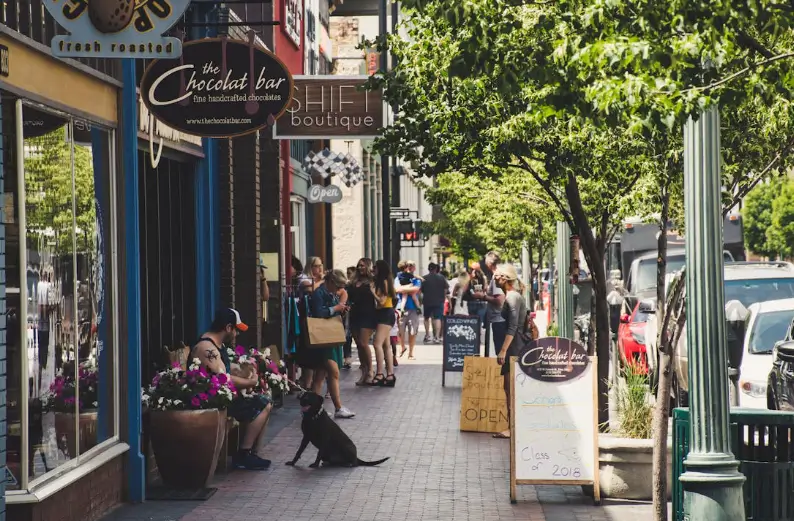
If you’ve ever walked down a shaded street, you know the feeling, your shoulders drop, you slow down, you breathe deeper.
Now compare that to a street with no shade: the glare off windshields, the heat radiating from asphalt, the silence except for cars.
One feels like life. The other feels like a mistake...a miserable one.
Researchers at MIT found that streets with trees encourage more walking and biking.
Other studies show fewer car crashes, lower stress levels, and even less crime where there’s tree canopy.
Maybe it’s because people use those streets more. Maybe it’s because shade feels like care.
The Economics of Shade
Cities spend billions widening roads, installing drainage systems, and repairing heat-damaged pavement.
A single mature tree can intercept thousands of gallons of stormwater a year, water that would otherwise flood into drains, damage foundations, or erode roads.
They’re small climate machines that run on sunlight.
The return on investment? Huge.
For every dollar spent on tree planting and maintenance, cities can see up to five dollars in benefits — from reduced energy bills, cleaner air, and higher property values.
Yet trees are still the first thing to go when budgets tighten.
They’re often labeled “beautification,” as if shade and breathable air are luxuries.
Roots of a Better City
A healthy city doesn’t just manage traffic, it manages temperature, air, and emotion.
Planting trees is one of the simplest, fastest, most affordable ways to make a city safer and more humane.
You don’t need a new highway. You need a shovel, a little soil, and a plan to care for what grows.