%20(1200%20x%20237%20px)%20(300%20x%2059%20px).webp)
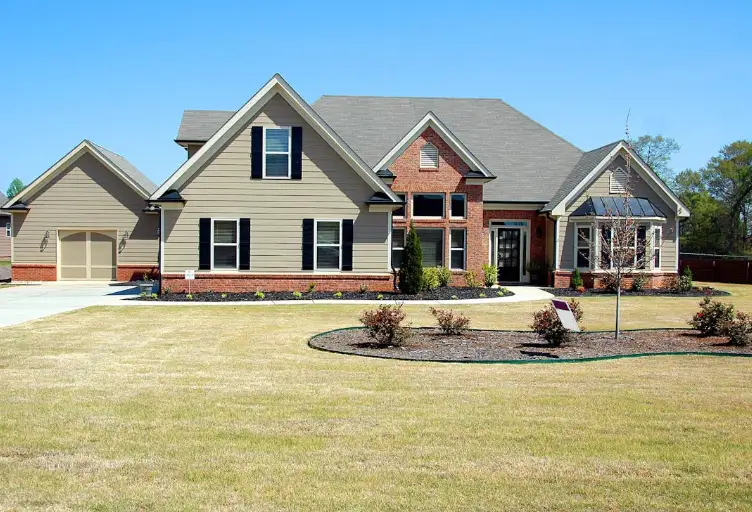
Single-family zoning sounds harmless.
You could say, it even sounds comforting.
Imagine driving through a quiet street.
Owning a house with a big back yard and a big front yard.
Space between you and the next house.
Who wouldn’t want that?
That’s the story we’re told.
Protection. Stability. Neighborhood character.
But scratch the surface and something else shows up.
Control.
Not personal control over your home.
Rather a collective control over land, people, and access.
And once you see it, you really can’t unsee it.
Single-family zoning didn’t appear because cities ran out of ideas on how to become better cities.
It showed up when cities wanted limits.
Limits on who could live where.
Limits on how many.
Limits on how close.
Limits on how affordable.
Privacy became the polite language for exclusion. Because saying “we want quiet” sounds better than saying “we want fewer people.”
And saying “protect property values” sounds better than saying “keep others out.”
We have to be honest about a few things.
Privacy is real and people value space.
But that’s not the lie.
The lie is that the only way to get privacy is to ban everything else.
A duplex? Nope. How about a triplex? Too dense. A small apartment over a corner shop? Absolutely not.
One house per lot.
Forever.
Look at the pattern.
Single-family zoning covers most of the land available for residential use. So, if a piece of property in your city is meant to allow for places where homes can occur, that property is more than likely only allowing single family houses.
And this property more than likely sits closest to the best schools.
The safest streets.
The strongest infrastructure.
The highest job access.
And it does something subtle.
It pushes everything else elsewhere.
Apartments go “over there.”
Affordable housing goes “somewhere else.”
Density gets concentrated.
Traffic piles up.
Commutes stretch longer.
Then the same neighborhoods say,
“See? Density causes problems.”
No.
Segregating it does.
Control shows up in the rules. Things like minimum lot sizes which forces properties to be larger than what is needed to build a house.
Then there's setbacks. Front, rear, and side setbacks which all but assures the house being built on said property will not use the property efficiently.
Height caps will limit how high a house can go...i.e. no chance for a small scale multi-family home.
Ah, and here's my favorite. Occupancy limits. Because God forbid more than one family live in someone's private property.
Each one sounds technical, but together, they act like a gate. But here's the thing. You don’t need a fence when zoning does the job for you.
And here’s where the conversation gets uncomfortable.
These rules didn’t just shape buildings.
They shaped people’s lives.
It basically dictates who gets to live near opportunity. Who can afford to build generational wealth. Who rents forever. Who drives an hour to work.
When housing supply is locked down, prices don’t stay polite.
They'll climb right over you.
Not because demand is greedy.
Because supply is handcuffed.
Ever notice how often “neighborhood character” comes up right before a housing proposal dies? I have. I've heard it more than I can stomach.
But what is character anyway?
A roof pitch?
A garage placement?
A household income?
Character becomes a moving target defined only when something threatens it.
And somehow, character is never threatened by a McMansion. Only by people.
What makes this worse is how normalized it feels.
We treat single-family zoning as neutral.
As default.
As the way things have always been...but that's just it. It hasn't always been like this.
This exclusion-loving environment was written by people, enforced by governments, and changeable, if we choose.
Think about this.
Many of the homes we now call “charming” would be illegal to build today.
Duplexes tucked on corners.
Small apartment buildings on quiet streets.
Accessory units in backyards.
They exist because they were built before the rules hardened.
We praise them.
Then ban their replicas. And that contradiction...that right there, tells you everything.
So why does reform feel so threatening?
Because loosening control feels like losing something...control.
It's losing that predictability, that dominance over outcomes, and probably the scariest of them all, losing the ability to say no.
But see, more housing types don’t erase privacy.
They distribute it by giving people options.
You want a detached home? Great!
Someone else wants a smaller place nearby? Also great!
A healthy city isn’t one where everyone lives the same way.
It’s one where people get to choose.
The real question isn’t whether privacy matters. of course privacy matters.
The question is whether privacy should come at the cost of exclusion.
At the cost of displacement.
At the cost of affordability.
At the cost of opportunity.
Because right now, that’s the trade we’ve accepted.
Quiet streets for some.
Long commutes and locked doors for others.
And until we stop pretending it’s only about peace and quiet,
we’ll keep mistaking control for comfort.