%20(1200%20x%20237%20px)%20(300%20x%2059%20px).webp)
Picture this.
You wake up, make coffee, grab your reusable bag, and take an elevator downstairs. Not to your car. Not to a long walk across a parking lot.
You step directly into a Costco.
No, this isn’t a joke.
And no, it’s not a gimmick.
It’s real. It’s happening. And it might tell us a lot about where American cities are headed.
In South Los Angeles, a new development is stacking hundreds of apartments on top of a Costco warehouse. Housing. Over retail. At big-box scale.
For a country that still treats housing and shopping like they must be separated by asphalt and traffic lanes, this is a quiet earthquake.
What’s Actually Being Built
Let’s get the basics out of the way.
This project includes roughly 800 apartments built above a Costco store. About 180+ units are set aside as affordable housing, with the rest aimed at workforce and market-rate renters.
Costco didn’t suddenly become a housing nonprofit. A private developer owns and operates the apartments. Costco is the anchor tenant below.
So no, you won’t be paying rent to the rotisserie chicken counter.
Still, this matters.
Because this isn’t about Costco.
It’s about land use.
Why This Feels Radical (Even Though It Isn’t)
From a planning perspective, there is nothing new about living over shops.
Most older cities figured this out a century ago. Apartments over stores were normal. Convenient. Human-scaled.
What’s new is where this is happening.
Big-box retail has long been treated as single-use territory.
One building. One purpose. Surrounded by parking. Usually hostile to anything that isn’t a car.
Putting housing on top of a Costco flips that model.
It says:
This land is too valuable to only store paper towels and SUVs.
And honestly? It’s about time.
The Land Problem No One Wants to Talk About
Here’s the quiet truth cities keep running into:
There isn’t enough land zoned for housing in the places people actually want to live.
So what do we do?
We push housing farther out.
We widen roads.
We add commute time.
We act surprised when traffic and rent explode.
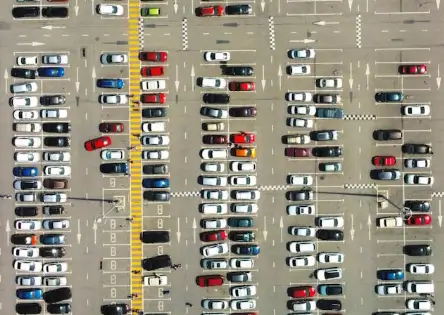
Meanwhile, cities are full of massive retail parcels that sit empty for half the day and nearly empty at night.
Parking lots the size of small neighborhoods.
Roofs doing absolutely nothing.
This project asks an obvious question:
What if we used that space better?
This Is Mixed-Use, But at American Scale
Planners love mixed-use. We talk about it constantly.
But most U.S. mixed-use projects are small. A few floors. A coffee shop. Some offices. Maybe apartments above.
This is mixed-use without pretending the big box doesn’t exist.
It accepts the reality of American retail and works with it instead of against it.
That’s an important shift.
Because cities don’t transform overnight.
They adapt.
And this is adaptation.
The Policy Side (Where the Real Story Lives)
This project didn’t happen by accident.
California has passed several laws designed to speed up housing approvals, especially when projects include affordable units.
Some of those laws limit the ability of local opposition to delay or block housing through endless review processes.
That’s key.
For decades, housing opponents have used environmental review, parking fears, and “neighborhood character” arguments to stop density, even in places drowning in parking.
This project moved forward because policy allowed it to.
Not because everyone loved it.
Not because it was popular.
Because the rules changed.
The Questions Planners Should Be Asking
It’s easy to cheer this as a win. And in many ways, it is.
But good planning isn’t cheerleading. It’s analysis.
So let’s ask the uncomfortable questions.
What happens if Costco leaves in 20 years?
Can the building adapt, or does the housing become stranded?
Are the affordable units affordable to local residents, or just affordable on paper?
Is this a model cities will replicate thoughtfully… or a loophole developers will exploit?
These aren’t reasons to reject the idea.
They’re reasons to design it well.
Why People Are Reacting So Strongly
Online reactions range from excitement to disbelief.
“Living above Costco?”
“Free samples as a perk?”
“What about noise?”
“What about traffic?”
Those reactions reveal something deeper.
Americans have been conditioned to believe daily life must be inconvenient.
Driving is normal.
Separation is normal.
Distance is normal.
Anything else feels strange.
But what’s actually strange is designing cities where nothing is near anything else.
This Isn’t About Loving Costco
Let’s be clear.
This isn’t an argument that everyone should live above a warehouse store.
It’s an argument that single-use zoning is wasting cities.
If housing can exist over a Costco, it can exist over:
- Grocery stores
- Big retail centers
- Strip malls
- Parking garages
- Underused commercial corridors
Places we already have.
Places already served by infrastructure.
That’s the real lesson.
A Quiet Reframe of “Neighborhood Character”
Opponents often argue that density “changes the character” of an area.
But what’s the character of a massive parking lot?
What’s the character of a roof no one sees or uses?
Projects like this force a reframing.
Character isn’t frozen in time.
It’s shaped by how land is used.
And right now, we’re using a lot of land very poorly.
Would This Work in Your City?
Here’s where this gets personal.
Would your zoning code allow housing above a big-box store?
Would your parking requirements kill the project before it started?
Would neighbors fight it, even if it meant affordable homes near jobs and services?
Most cities would answer “no” to at least one of those.
That’s more than just a design problem.
That’s policy gone wild...ly wrong.
The Bigger Takeaway
You don’t have to love Costco.
You don’t even have to like this project.
But you should pay attention to it.
Because it shows what happens when cities stop pretending land is infinite and start treating it as precious.
Housing doesn’t always have to sprawl outward.
Sometimes, it just needs to go up.
Even if that means the elevator opens next to a pallet of toilet paper.