%20(1200%20x%20237%20px)%20(300%20x%2059%20px).webp)
You might not know this but zoning has never been neutral.
That may catch you of guard being that zoning is often treated like background noise.
Dry maps.
Technical language.
Setbacks, lot sizes, height limits.
It feels neutral. Objective. Almost boring.
But truth is that zoning has never been neutral.
From its earliest days, zoning was about control. Control over land, yes. But more importantly, control over who belonged where. And I hate to tell you this...I really do...but those decisions were deeply racial.
If you want to understand why American cities are so segregated, so unequal, and so expensive today, you have to understand zoning’s origins. Not as a side story but as its foundation.
Before Zoning, Cities Were Dense and More Integrated
Before modern zoning codes, American cities were by all standards, messy.
Homes sat next to shops.
Apartments existed alongside single-family houses.
Boarding houses, duplexes, and triplexes were common.
This was how cities functioned and that mix...that messyness, mattered.
Density allowed people of different incomes to live near one another. Workers lived close to jobs. Housing types varied. Neighborhoods changed gradually.
But to many white elites in the early 1900s, this was not a virtue. It was a threat. Not because of safety or sanitation but because proximity challenged social hierarchy.
Early Zoning Was Explicitly About Race
When cities first adopted zoning ordinances in the early 20th century, some didn’t even pretend to hide their intentions.
Cities like Baltimore passed laws that explicitly barred Black residents from living on blocks where white residents were the majority. These were direct tools of racial segregation.
Courts eventually struck down explicit racial zoning as unconstitutional. But the message was clear.
Zoning wasn’t just about separating factories from homes it was also about separating people.
When the courts closed the front door to racial zoning, cities didn’t abandon the goal. They just changed tactics.
The Shift to “Race-Neutral” Exclusion
After explicit racial zoning was banned, planners (yes planners) and policymakers pivoted toward rules that regulated buildings instead of people.
Minimum lot sizes required homes to sit on large parcels of land.
Single-family zoning eliminated apartments, duplexes, and boarding houses.
Setbacks and coverage limits reduced how much housing could be built.
On paper, these rules seemed neutral...they still do.
But in practice, they were devastatingly effective.
If only large, expensive homes are legal, only wealthy households can move in. And because wealth in the U.S. was already racially unequal, the outcome was predictable.
Segregation without mentioning race.
Single-Family Zoning as a Gatekeeper
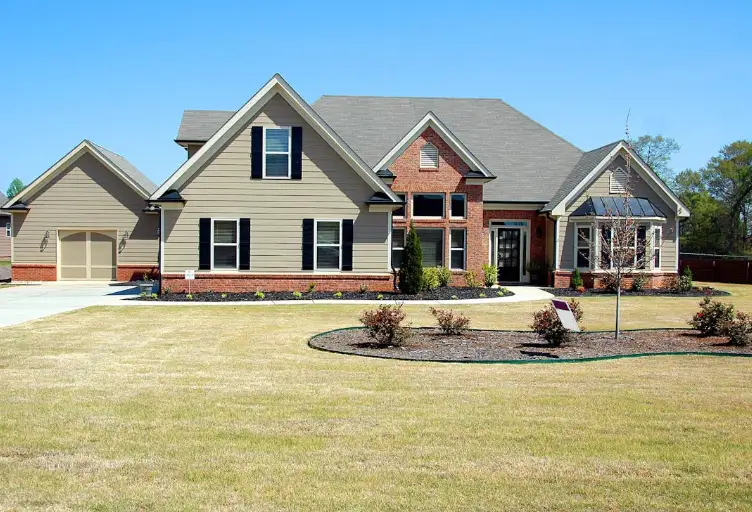
Single-family zoning became the most powerful exclusionary tool in American planning.
By mid-century, vast portions of cities were legally restricted to detached houses only. No apartments. No duplexes. No townhomes.
Today, that legacy remains.
Roughly 75% of residential land in major U.S. cities is still zoned exclusively for single-family homes. That means most neighborhoods legally prohibit the very housing types that are most affordable and most accessible to renters, first-time buyers, and lower-income households.
This isn’t incidental.
Academic research shows that anti-density zoning policies are strongly and statistically linked to higher levels of Black residential segregation. Restricting multifamily housing doesn’t just reduce supply but it also reshapes who can live where.
You don’t need explicit racial bans when zoning does the sorting for you.
Redlining Locked Inequality in Place
But zoning didn’t act alone.
At the same time cities were tightening land-use rules, federal housing agencies were drawing redlining maps. Neighborhoods with Black residents were labeled “hazardous.” Banks denied mortgages. Investment evaporated.
The effects were brutal and long-lasting.
Meanwhile, white neighborhoods received subsidized loans, infrastructure, and protection from change and zoning reinforced this divide.
White neighborhoods were protected from apartments and density.
Redlined neighborhoods were overburdened with industrial zoning, highways, and disinvestment.
The result was a self-reinforcing system of segregation.
Today, the data shows just how durable that system has been.
In racially segregated Black and brown neighborhoods, poverty rates are roughly three times higher than in segregated white neighborhoods. Median household incomes and home values are about half as high, and homeownership rates hover around 46% compared to 77% in white neighborhoods.
These gaps didn’t appear naturally. They were intentionally planned.
Urban Renewal: Destruction Disguised as Progress
Mid-century urban renewal deepened the damage.
Under the banner of “slum clearance,” cities demolished Black and brown neighborhoods across the country. Entire communities were erased to make room for highways, civic centers, and parking.
Zoning played a quiet but critical role.
Neighborhoods already harmed by redlining were labeled blighted while industrial and highway uses were zoned next to homes. These residents had little political power to resist displacement.
Communities with power were protected, communities without it were sacrificed.
The Long Shadow of These Decisions
Fast-forward to today.
The rules written decades ago still dictate who gets access to opportunity.
Neighborhoods with good schools, jobs, and services remain locked behind single-family zoning.
Housing shortages drive prices upward all but guaranteeing lower-income families being pushed farther from opportunity.
The United States is currently short nearly four million homes, and restrictive zoning is consistently cited as one of the primary reasons new housing can’t be built where it’s most needed.
But this isn’t a market failure, it’s a legal one.
Why This History Still Makes People Defensive
Talking about zoning’s racist roots makes people uncomfortable.
In my career, I heard it all the time (especially while working on reforming single-family zones):
“I didn’t write those rules.”
“It’s about neighborhood character.”
“This isn’t about race anymore.”
But policies don’t need racist intent today to produce racist outcomes.
When a system was designed to exclude, maintaining it unchanged continues that exclusion.
Research consistently finds that restrictive zoning correlates with higher levels of both racial and income segregation in modern metro areas. These patterns persist because the rules persist.
Silence preserves the status quo.
The Myth of “Neighborhood Character”
Ah, "neighborhood character". Few phrases are as powerful, or as misleading, as “neighborhood character.”
It sounds warm. Protective. Reasonable.
But historically, it has often been code.
Code for protecting property values.
Code for preserving exclusivity.
Code for keeping people out.
If a neighborhood’s character depends on legal barriers that prevent others from living there, it’s worth asking whose comfort is being prioritized.
Zoning Is a Moral Document, Not a Technical One
Planners are trained to think technically. We're often concerned with ratios, categories, and permitted uses among other things.
But zoning is not just some legal restriction or regulation, is a moral document. Zoning gets to decide who gets access to good schools. Who lives near jobs. Who bears pollution and traffic. Who builds wealth through homeownership.
And let me tell you, those outcomes aren’t evenly distributed...they never have been.
Reform Is About Repair, Not Erasure
Zoning reform is often framed as radical.
It isn’t.
Allowing duplexes and triplexes in single-family zones should not be a war.
Legalizing accessory dwelling units is not going to destroy your neighborhood (though I'm sure that will be the argument...because I've heard it before....I've also seen neighborhoods with ADUs....that are not destroyed....a lot of them).
Reducing parking requirements is not going to create an apocalyptical car montage on your streets. Allowing apartments near transit and jobs is not going to affect your ability to get to your job.
The truth is ,these changes don’t destroy neighborhoods. Rather, they repair harm. They reopen doors that zoning deliberately closed.
Maybe it's time for commissioners and politicians, instead of demanding planning staff to jump through hoops and fire just just to prove that single family reform is a necessary thing and that it won't destroy neighborhoods, to ask the loud, unrepresentative, group at your commission meetings to prove that it will.
Why Incremental Change Still Matters
Critics argue that small zoning reforms won’t solve everything.
They’re right.
But doing nothing guarantees the harm continues.
Every year exclusionary zoning remains intact is another year opportunity is rationed.
See, reform isn’t extreme. But exclusion is.
Why the Fights Are So Intense
Housing debates feel emotional because they are.
They touch on fear, identity, and loss of control.
But beneath the surface, many of these fights are about whether cities will continue enforcing rules designed to exclude or finally confront their origins.
That tension isn’t going away, if anything, is going to get worse.
Planning Can Help Undo What It Helped Create
Planning helped create inequality. That means planning can help undo it.
But only if we’re honest.
Only if we stop pretending zoning was neutral to begin with.
Only if we’re willing to ask who our rules serve and who they lock out.
The Bottom Line
Zoning didn’t just organize cities it organized inequality.
Its racist roots are embedded in the maps and codes still governing where housing can exist.
We have to come to the realization that zoning reform isn’t about ideology but justice.
If we want cities that are fair, accessible, and alive, we can’t keep enforcing rules designed to keep people apart.
The first step is telling the truth.
Even when it’s uncomfortable.