%20(1200%20x%20237%20px)%20(300%20x%2059%20px).webp)

Let’s address the fear head-on.
Whenever mass transit comes up, someone inevitably says it:
“They’re trying to take away our cars.”
It’s usually said with certainty.
Sometimes with anger.
Often with genuine anxiety.
And here’s the important part planners don’t always say out loud: that fear makes sense...given the system people live in today.
But it’s also wrong.
Not because people are stupid or misinformed, but because the conversation is framed backwards.
Mass transit advocacy is not about forcing people out of cars.
It’s about fixing a transportation system that currently gives people no real choice.
Cars aren’t dominant because people chose them freely
Let’s start with the data.
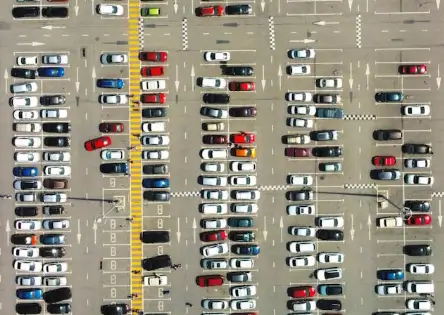
In the United States, over 86% of trips are made by private vehicle, and nearly 70% of commuters drive alone to work. That number is often cited as proof that “Americans prefer cars.”
But preference only means something when there's an alternatives. And the fact is, there are not much alternatives out there.
In most U.S. cities:
- Transit is infrequent or unreliable
- Sidewalks are incomplete or nonexistent
- Bike networks are disconnected or unsafe
- Land uses are spread so far apart that walking is unrealistic
When you compare this auto centric reality to the existing transit network we have today, you realize, there really is no choice other than driving. And when driving is the only practical option, driving statistics don’t tell us what people love. Rather, they tell us what people are forced to do.
If you build a system where every daily task requires a car, people will drive.
No one can call that freedom with a straight face...at least they shouldn't.
What mass transit actually does: it removes forced driving
Here’s the core misunderstanding.
Advocating for transit is not saying,
“You shouldn’t drive.”
It’s saying,
“You shouldn’t have to.”
There’s a massive difference.
In places with strong transit, people still own cars.
They just don’t need to use them for every single trip.
That’s the goal.
Not car elimination.
Car optionality.
Even drivers benefit when other people don’t have to drive
This is the part that gets overlooked the most.
You can love your car, drive every day, and still benefit from mass transit.
Because every person who:
- takes a train instead of driving
- rides a bus instead of driving
- walks or bikes instead of driving
…is one less car in front of you.
Congestion isn’t caused by transit riders.
It’s caused by too many people being forced into cars at the same time.
Transit works best when it removes entire vehicles from the road, not when it tries to convert every driver. Even modest mode shifts can dramatically improve traffic flow.
So when someone says,
“I don’t use transit, so why should I pay for it?”
The answer is simple:
Because it makes your drive easier.
Car dependence is expensive, even if you “like driving”
Transportation is the second-largest household expense in the United States, often exceeding $10,000 per year. When you add up car payments, insurance, fuel, maintenance, and depreciation, the cost of simply getting around quietly rivals housing for many families.
That cost isn’t always felt as a single bill, which makes it easy to ignore. But it’s real.
In more transit-rich areas, households consistently spend less on transportation, even when housing costs are higher. Why?
Because owning fewer cars, or using them less, adds up fast.
Mass transit doesn’t punish drivers.
It reduces the financial pressure to own multiple vehicles just to function.
“But transit doesn’t work here”
This is another common response.
And again, the frustration is understandable.
In many U.S. cities, transit feels slow, inconvenient, or unreliable. But that’s not evidence that transit can’t work.
It’s evidence that we built cities in ways that make transit hard to succeed.
Transit thrives when destinations are close together, land uses are mixed, and streets are designed to be walkable. Frequent service matters more than sprawling coverage, because people are far more likely to use transit they can rely on without checking a schedule.
When daily needs are within a short distance and the walk to transit feels safe and comfortable, transit stops being a last resort and becomes a natural choice.
But instead of creating an urban environment where transit can thrive, we often do the opposite.
We build low-density, single-use neighborhoods, then drop a bus route into them and act surprised when ridership is low. That’s not a transit failure. That’s a planning failure.
Good transit doesn’t exist in isolation.
It’s part of a system.
The real tradeoff no one talks about
Here’s the uncomfortable truth.
We already force tradeoffs.
They’re just invisible.
We trade:
- public space for parking
- safety for speed
- time for distance
- money for car ownership
- independence for dependency
But mass transit is not introducing another tradeoffs though it may seem like it is. Rather, mass transit is rebalancing them.
It gives people alternatives so they can decide how to move based on context, not necessity.
Look at where transit actually works in the U.S.
Even in the United States, the places with the strongest transit systems share a clear set of traits. They tend to have compact development patterns, walkable station areas, and a mix of housing, jobs, and services near transit stops.
Just as important, they prioritize frequent service, which makes transit reliable enough to fit into daily life rather than something people use only when they have no other option.
These places didn’t “ban cars.”
They made cars optional.
And interestingly, they’re also some of the most economically productive, resilient, and desirable places in the country.
People vote with their feet.
And demand for walkable, transit-supported places consistently outpaces supply.
Why the “war on cars” narrative sticks
The fear persists because for many people, their car is their freedom.
When you live somewhere with:
- no sidewalks
- no transit
- no nearby destinations
…your car is the only thing standing between you and isolation.
So when someone hears “invest in transit,” they don’t hear “more options.”
They hear “don’t take away the only thing I have.”
We need to acknowledge this. But we also need to reframe it.
The correct way to talk about mass transit
We don’t win people over by saying:
“You shouldn’t drive.”
We win by saying:
“You deserve choices.”
Choices that look like real, everyday freedom. Choices that look like older adults who don’t have to drive forever just to stay connected, teens who can move independently without relying on rides, and people with disabilities who can reach daily needs safely and reliably.
Choices that look like families who aren’t forced to own multiple cars just to function, and drivers who simply want less traffic on the roads they still choose to use.
See, transit is not about restrictions. It's about making daily life easier for everyone (even those people who can't spend $10,000 a year to own a car...let alone two).
The bottom line
No one is trying to take your car.
We’re trying to build a transportation system where:
- driving is a choice, not a requirement
- congestion is manageable
- mobility doesn’t depend on income or ability
- cities work even when gas prices spike
- life doesn’t stop if you can’t drive
You can keep your car.
You can love your car.
Just don’t confuse a lack of options with freedom.